Program

Participating Schools

Williamsburg Collegiate Charter School

Brooklyn, New York

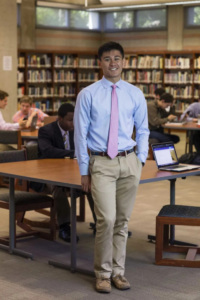
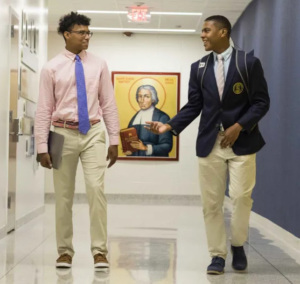
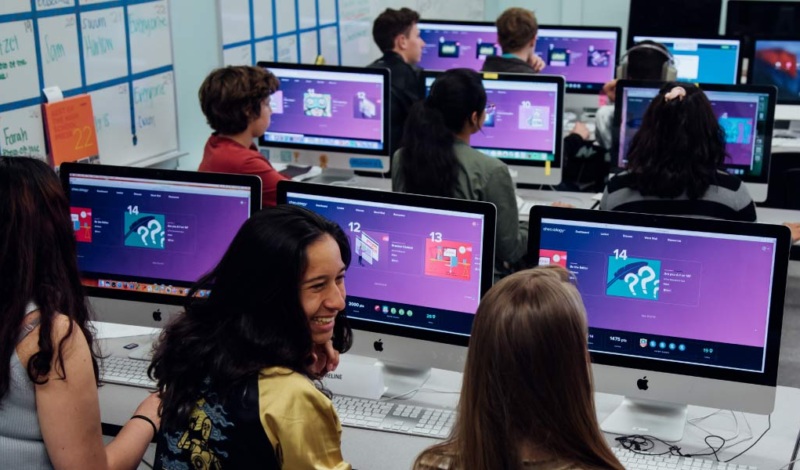
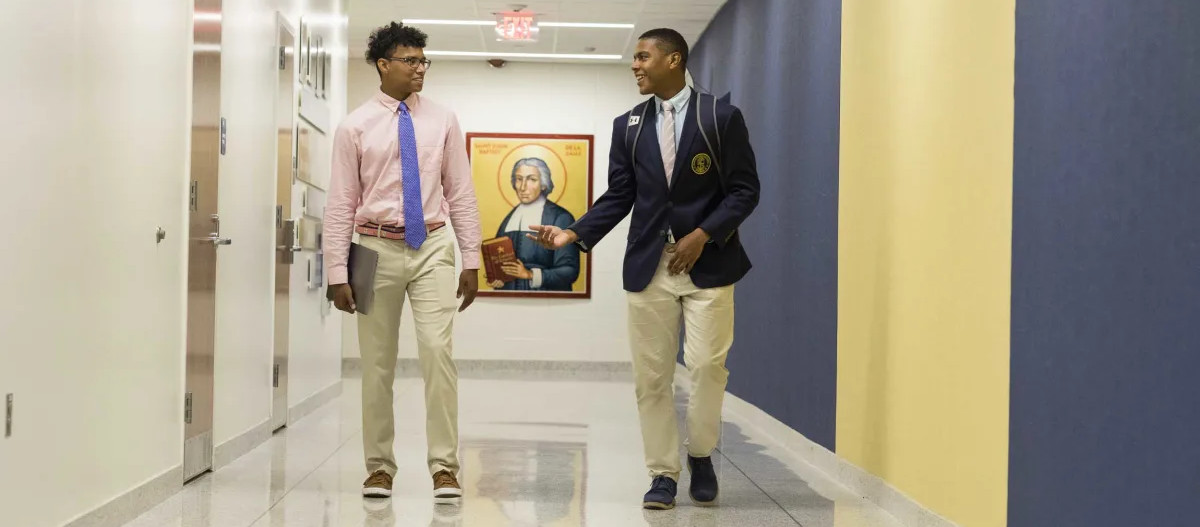
Williamsburg Collegiate Charter School, a middle school in Brooklyn, N.Y., is one of the News Literacy Project’s educational partners. WCCS is a member of the Uncommon Schools consortium, a group of innovative charter schools in the northeastern United States that emphasize high standards, structured environments, college preparation, excellent teachers and talented administrators. WCCS’s teachers range in age from 24 to 42; its Harvard-educated principal helped write the school’s charter. Its student body, which numbers around 260, is accepted by lottery and is drawn from four of New York City’s five boroughs. More than half the students are Latino and nearly half are African-American; more than 80% qualify for free or reduced-price lunch programs. Students follow a strictly enforced dress code, commit to an extended day and school year and, if necessary, Saturday classes. The New York City Department of Education ranked WCCS as one of its two top-performing charter schools last year. More than 100 students in five sections of 7th and 8th grade history classes and two teachers participated in the project last spring. The project is working with about 125 students in 7th and 8th grade history throughout the current school year and helped the school start its first student newspaper with News Literacy Project journalists acting as outside advisers.  “We appreciate the opportunity to work with the News Literacy Project,” said Principal Julie Kennedy. “The unique expertise and perspective of the journalists help us truly fulfill our mission of preparing students for college by teaching our students the skills necessary to become active and productive members of our intellectual community.”

Facing History School

Manhattan, New York

One of our initial New York City educational partners is the Facing History School, a small, innovative, non-charter public high school on Manhattan’s West Side. The school, which was founded in 2005 and graduated its first senior class in 2009, focuses on understanding history through the lives of those who lived it, historical texts and community engagement. Its stated mission “is to graduate lifelong learners with the skills and knowledge for academic and professional success, and to shape responsible, active, thoughtful participants and leaders in a democratic society.’’ Facing History focuses an entire year on the Holocaust and a second on eugenics and race relations in the United States. It requires 250 hours of community service. A senior year research project further dovetails with the News Literacy Project. Facing History is also a New York Consortium School, which makes it less dependent than conventional programs on high-stakes testing for graduation requirements. This permits the school to focus on assessments based on such things as literary essays, original science experiments and research that demonstrates the use of evidence and argument. The student body is nearly 100% minority. Students come from four boroughs; about 80% qualify for free or reduced lunches. During its pilot in the spring of 2009, the project worked with more than 50 seniors and two English teachers. In the past school year, the project expanded to include four teachers and about 140 students in 12th grade English, AP English and 10th grade Humanities, including an English Language Learners class. Facing History Principal Gillian Smith says of the project: “Virtually all the outside programs that seek to come into our school claim that they build critical thinking skills. The difference is that the News Literacy Project actually helps students achieve these skills. It is a program that is rich in experience and rich in education.” She continues, “In a short time we have seen the project make a difference in students’ writing, in their attention to detail, in how they read and how they react to and understand a text. We’ve also seen a noticeable impact on students’ self-esteem when accomplished journalists take time from their busy schedules to come to our school to speak to and work with our students. We’ve seen students sit down and actually want to read articles by the journalists, or even just the journalists’ bios. They want to engage, and they are eager to do so.”

Walt Whitman High School

Bethesda, Maryland

Another partner is Walt Whitman High School in Bethesda, Md. Whitman is one of the top-ranked public high schools in America, with 15% to 20% of its seniors either receiving Letters of Commendation or being named semi-finalists in the National Merit Scholars program. In 2010, 87% of the school’s graduating seniors enrolled in four-year colleges or universities and 9% in two-year colleges. Its more than 1,900 students come from more than 40 countries. More than 500 students in the school’s AP government and other government classes and six teachers participated in the project in the spring of 2009. About 625 students in AP government classes and 12th grade English classes and seven teachers participated in the 2009-2010 school year.
“NLP has given students the tools to distinguish fact from fiction, opinion from propaganda and how to use and produce credible information in our digital age. The instruction has helped bring an understanding of the First Amendment and an appreciation and value of a free media,” said Principal Alan Goodwin. “Perhaps most importantly, NLP provides students with lifelong critical thinking skills that help make our students become more engaged citizens and better-informed voters.”

Marquette School

Chicago, Illinois

A multicultural neighborhood school on Chicago’s Southwest side, Marquette enrolls about 1,500 children in 1st through 8th grades; 54% of the students are Hispanic and 46% African-American, and 98% qualify for free or reduced-price school lunches. It has joined with the Southwest Organizing Project in one of five school-community partnerships participating in ELEV8, an Atlantic Philanthropies-funded program to provide integrated services, including health care and after-school opportunities, to middle-school students. Marquette is an International Baccalaureate Middle Years Programme school, providing a rigorous interdisciplinary approach to learning that encourages critical thinking. The school plans to offer the News Literacy Project to about 150 6th-grade students in five sections this fall. “We are very excited to be a participant in the News Literacy Project,” said Marquette Principal Paul O’Toole, a faculty member since 1990. “Technology has made the world smaller and the amount of information that is readily available is unprecedented. We are looking forward to our students learning how to be critical analysts of the data they encounter and active participants in the dissemination of news, commentaries” and other forms of communication.

Perspectives Charter School (Calumet Middle School)

Chicago, Illinois

Opened in August 2007 with the help of the Bill and Melinda Gates Foundation, Perspectives Middle School serves almost 400 students from the surrounding Auburn Gresham community. More than 98% of the students are African-American; 96% qualify for free lunches and the remainder for reduced-price lunches. The school has partnered with LISC-Chicago and the Greater Auburn Gresham Support Corporation to become part of the Elev8 Program, an integrated services effort funded by Atlantic Philanthropies. Perspectives schools were founded on the idea that small school settings are essential to providing students with the personal attention, sense of individual importance and belonging, and increased one-on-one time with teachers and staff that are necessary to create a “college for certain” environment. Principal Tamara Davis said this makes the school a strong fit with the News Literacy Project. “Because it is student-centered,” she said, “students think on multiple levels to convey messages that are integral to not only our school, but their lives.” The project is supporting a news literacy curriculum in eighth grade social studies classes, as well as in an extended-day program that is also receiving guidance from professional journalists to improve and expand the student newspaper.

The Reavis School

Chicago, Illinois

Since 2004, when it was on academic probation, the Reavis School has undergone what its principal, Michael Johnson, calls a “rebirth.” Located on the border of the Grand Boulevard and Washington Park communities on Chicago’s South Side, Johnson and the Reavis staff have spent the last six years turning the school around by tightening schedules and discipline and adding a number of enrichment programs. Most notably, Reavis partnered with the Quad Communities Development Corp. to join Elev8 Chicago, a school-community partnership that works to bring support and enrichment resources to schools. Reavis enrolls more than 400 children in pre-K to 8th grades. The student population is more than 98% African-American; nearly 92% of the students qualify for free or reduced-price school lunches. The school is offering the News Literacy Project as an after-school program in which students are working to produce a radio documentary report on a local issue. “This program is important to Reavis because so much [information] gets pushed onto our students and even our parents,” Johnson said. Students “need skills and knowledge just to wade through it all. If young people in communities like ours don’t develop these skills, they are forced to believe … false stories and unconsciously begin to buy into them.”

Greater Lawndale High School for Social Justice

Chicago, Illinois

The Greater Lawndale High School for Social Justice is one of four independent campuses that share the main facilities and resources at the Little Village Lawndale High School. The school defines its mission as delivering a unique curriculum that emphasizes the ideals of peace, activism and social empowerment. The school enrolls about 400 students, more than 83% of whom are Hispanic and 16% African-American. Almost 98% of students qualify for free or reduced-price lunch programs. The News Literacy Project is teaming with faculty member David Hernandez, who runs a colloquium on student journalism called the Lawndale for Justice News. The colloquium currently has about 20 members and spans grades 9 through 12. The project will not only enhance these students’ grasp of key news literacy concepts, but also aid them in the production and expansion of the Lawndale for Justice News website (www.lawndaleforjusticenews.com). Hernandez thinks that the “News Literacy Project aligns perfectly with the vision of Social Justice High School,” whose mission “is to assure that all students become critical thinkers through a curriculum that is rigorous and innovative” as well as “project-based.”